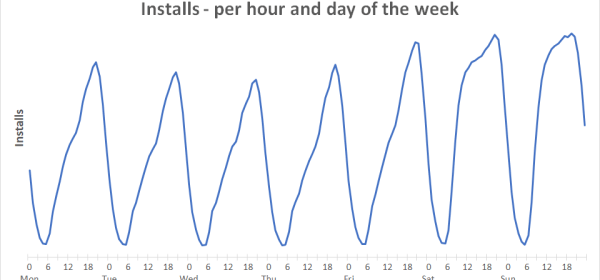
Users install and play games on a very regular 24-hour/7-day cycle. This post discusses what that means for your game, and how you can leverage that to design features that capitalize and reinforce that natural tendency.
Research on mobile games and monetization
Users install and play games on a very regular 24-hour/7-day cycle. This post discusses what that means for your game, and how you can leverage that to design features that capitalize and reinforce that natural tendency.

In this post I explain why having a set of game-centric metrics is crucial to understanding how users are interacting with your game and tying your high-level product objectives with gameplay specific targets.

This post discusses how restricting access of some of the content in your game to customers can be a monetization strategy that is both rewarding for your users and pays off for you.

There is a common theme in the industry that suggests retention is the most important metric for the financial success of any game – more than monetization metrics. This post looks at some key data points that show the difference between monetizing a little bit and monetizing a lot is not due to engagement. It rather results from how frequently users make purchases when they are active in a game.

Maximizing revenue in your game is a balancing act between conversion and revenue per transaction. This post looks at the impact price point has on spending patterns and suggests a few rules of thumbs to define your pricing strategy.

Knowing which questions analytics can and cannot answer is not a theoretical consideration. It has very practical consequences. Having a data-driven culture means knowing what type of questions data can answer, and what type of questions it can’t answer.
 Alexandre Macmillan