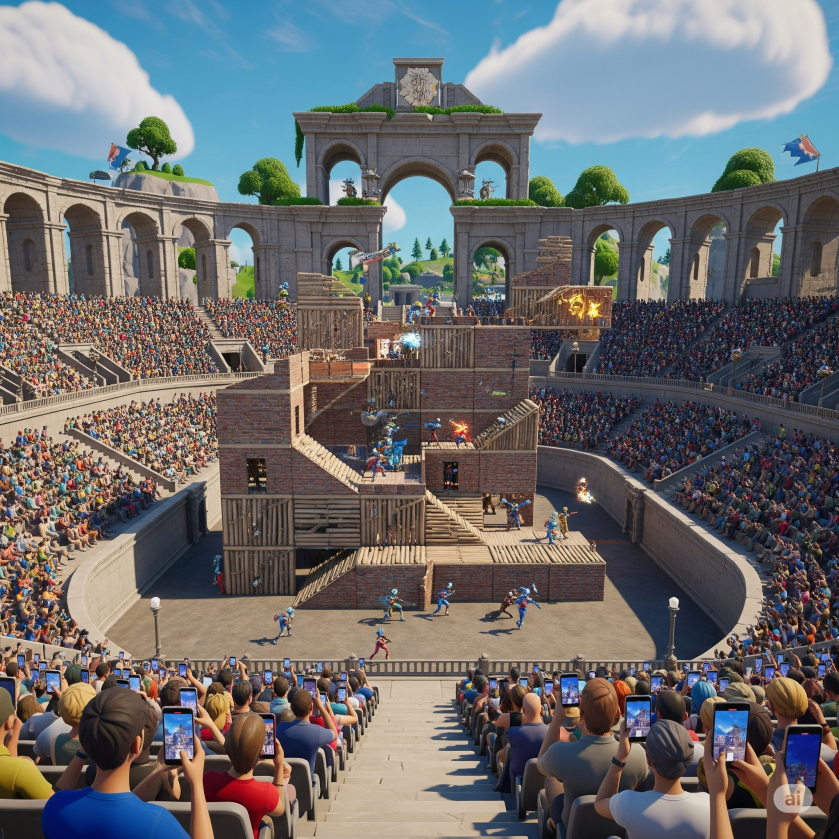
Watching people play
Because my personal background is in media, I’ve always found the intersection of playing and watching games interesting. For 2 main reasons (I’ve written about it here and here). First because it’s part of a shift in the entertainment ecosystem. Engaging with games is no longer limited to playing them. People are turning more and more to various platforms to watch others play. So people are consuming games differently – and in doing so moving away from traditional content people used to watch on TV. Second, this has direct product implications. What makes a game fun to play is not always what makes it fun to watch. Take Clash Royale for example. When you play a game you don’t see what cards the opponent has. On the other hand the spectator watching a CRL match gets to see all the cards both players have. This asymmetry between what the players see and what viewers see creates the dramatic tension, suspense and surprise which are at the heart of all good tragedies. So designing games – or game modes – with viewers in mind requires a bit of a different mindset.
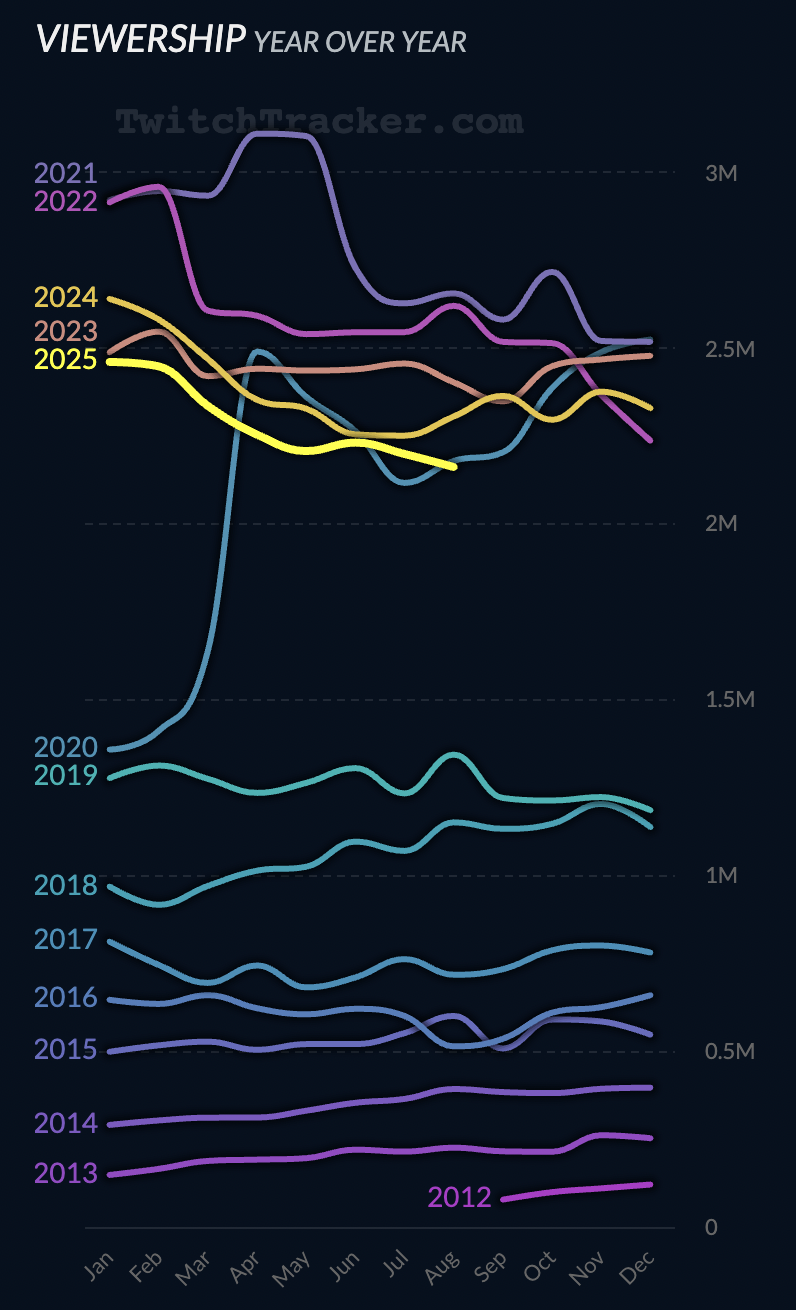
It is difficult to find verifiable and highly reliable data. However, according to Twitch Tracker Total viewership has declined on the platform since the highs of 2021 – but still more than double its pre-pandemic numbers
The growth for YouTube gaming seems to have been exponential. According to Gemini, below are the viewership numbers for Youtube gaming viewership
- In 2018: 50 billion hours of gaming content on YouTube.
- By 2020, this number had more than doubled to over 100 billion hours watched for the year.
- In 2022, YouTube Gaming saw a total of 4.5 billion live stream hours watched
There was also a pretty impressive “research” option on Gemini on YouTube viewing. I’ve copy pasted it as is (with zero modifications) and it’s definitely worth checking here. (heads up – it’s a long read so you should use AI to summarize it)
Watching Fortnite competitive
According to Stream Hatchet, as of writing this post Fortnite is the 6th most watched game on Youtube gaming and 7th on Twitch. Again those numbers are only estimates – the main point remains that Fortnite is a top watched game.
Of course multiple players are simply streaming default vanilla games. What interests me here is Fortnite competitive game modes. There are multiple different tournaments with different requirements to participate. The most competitive ones require qualifying in previous tournaments.
Higher-end tournaments attract the best players, and this provides a unique viewing experience. Unique because it really highlights a different way to play the game you won’t find when launching a standard Battle Royale match. Tournaments involve playing multiple games. Players or teams get points by ranking high and getting eliminations – and the team with the most points at the end of the tournament wins. Of course some players are more aggressive than others. But because placement points far outweigh points from kills, players are incentivized to not die rather than getting eliminations. This has been so effective in having players play defensively and hiding that Fortnite introduced a “Storm Surge” effect to get players to fight each other more and have fewer players converge towards the end (players who have dealt the least damage to opponents periodically lose HP). In addition, Fortnite also regularly introduces side goals (like killing a specific NPC to get a booster, accessing a specific location that spawns in the middle of the match, or having an in-game ranking system that provides bonuses or weapons). This kind of creates “side stories” in the tournament
This shift in incentive, combined with the high skill of players, is what makes tournaments so appealing for viewers. Playing optimally requires a bigger focus on teamwork, resource and loadout management, navigating the storm, and how (and when) to engage with opponents. On the one hand the final storms offer a unique climax you won’t see in standard battle royale games. Because players focus on staying alive, there is a huge concentration of players in a very small zone at the end of a match.

On the other hand, building is the core component of successful teams – players build to provide cover and avoid getting damaged. Teams are literally creating huge fortresses in a tiny space.

Simply put, when you’re watching a Fortnite tournament, you’re watching something you never see in a regular game. Something where the end of the match is filled with suspense, reversal of fortune, close calls and unexpected finishes. And those are all the elements of great drama and make tournaments exciting to watch.
This doesn’t mean there are no challenges in delivering this experience to viewers. In all the sporting events I can think of, there is one static field where 2 opponents or teams face off. So you can have a total overview of the action from one single vantage point. In Fortnite, there are multiple teams. And the playing field is shrinking: there are many empty spaces.
Watching the live stream can be overwhelming as it’s difficult to get an overall sense of the match early on. The focus shifts quickly, and it’s not uncommon for a lot of different entertaining things to happen at the same moment in 2 different locations. Summaries edited in post also struggle to provide an overview of the tournament. They seem to create a narrative about the winning team – more than being an edited “gameplay highlight reel”. But that’s more a “broadcasting” challenge than a gaming one. You could imagine having a highlight template that contains multiple dramatic elements aside from following the winner: a few funny fails, a near miss, a comeback, top eliminations, a stealth moment, etc.
What learnings for mobile?
Aside from a few exceptions, the hype that surrounded mobile esports died off. No doubt the state of the mobile market explains this. Few top games and new games coming out lend themselves to competitive gaming. A game where skill and dexterity are involved will tend to showcase different ways to play the game – but high levels of skills/dexterity is not really what mobile gaming is about. So that’s another systemic challenge for esports in mobile.
Despite those points, there is value in the Fortnite example for all games considering developing a competitive viewing experience. Changing the success criteria for the competitive game mode changes how the game is played. And this can be done in a way to highlight the most unique aspect of the game (in the case of Fortnite, the building) and creating a higher dramatic climax. Introducing new side goals
What Fortnite tournament shows is that a successful esports strategy cannot just be about playing the game well. It has to be about pushing what makes the game unique to the extreme, and changing features/incentives to create a higher dramatic tension with more close call moments, more random or unexpected outcomes, reversals of fortune, etc. And ultimately about changing the rules to make that happen.
 Alexandre Macmillan
One comment